Inside the tomb of the Warrior Prince

7th century BC · Casale Marittimo

An Etruscan prince
sleeps among the vines

In 1987, during farm work, our land revealed one of the most important Etruscan archaeological sites of recent decades.

The Necropolis of Casa Nocera

01

The Necropolis of Casa Nocera

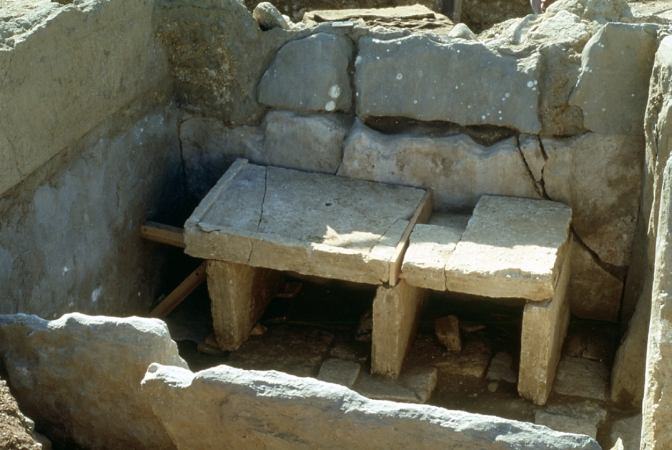
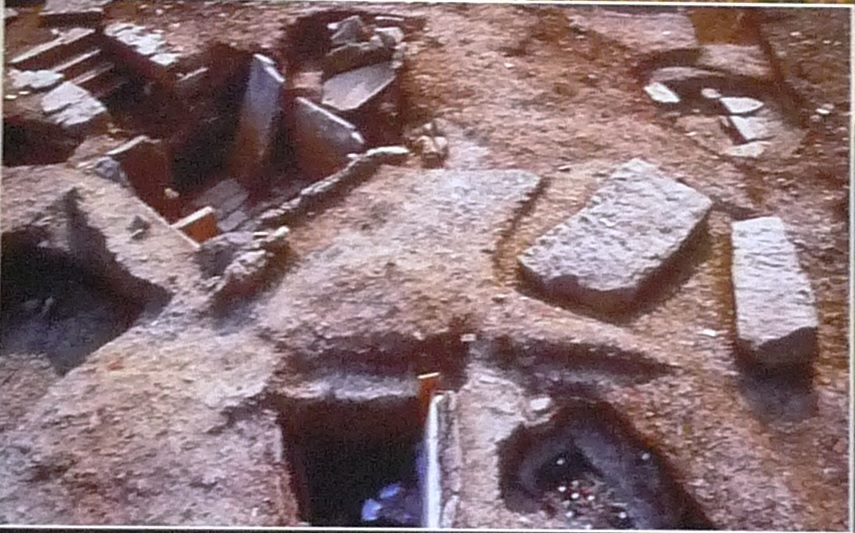
The excavation of the Casa Nocera necropolis began following the report of the discovery of some finds in 1987 during agricultural work. The structure of the tomb, a large stone slab case, is in all respects similar to that of the most important burials in Volterra. Inside it was laid a large impasto ceramic container, intended to contain and protect the bronze cinerary vessel, while outside were the grave goods, which described the identity of the deceased.

The grave goods from the necropolis of Casa Nocera, connected to the settlement of Casalvecchio, a village at that time located on a small hill to the east of present-day Casale Marittimo, reveal the wealth of the Etruscan Princes who lived here: the aristocratic classes sought luxury goods (objects, metal weapons, painted ceramics, ivories) that would indicate their social status, in life as well as at the time of death. It is for this reason that between the late 8th century and the first decades of the 7th century BCE, a funeral of considerable wealth was celebrated at the death of a personage we can identify as the founder of the Casalvecchio settlement. The bronze weapons, the helmet and parade shield tell us of a warrior; the axe, in the Etruscan world, symbolized political and military power; the lituo - a curved staff - made of ivory and the knife identify this eminent personage as a priest of the community as well as the head of the clan.

The objects found, as well as the pomp of the ceremony and the structure of the necropolis, thus identify a Warrior Prince. During the 7th century B.C. other members of the same dynasty settled on Casalvecchio Hill were buried in the same necropolis as the Prince: the bronze objects, especially the weapons, indicate their role as warriors.
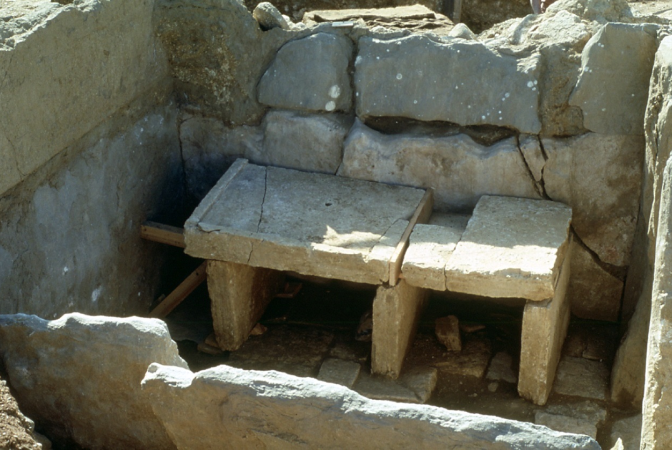
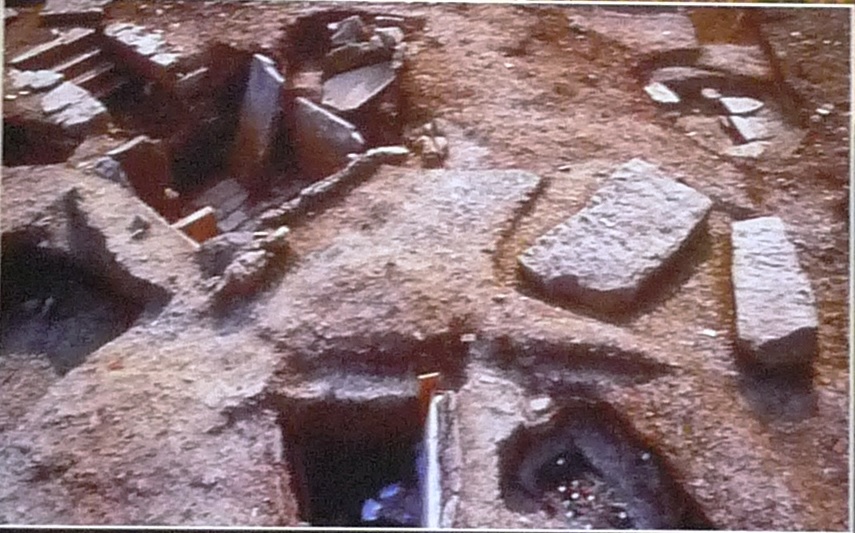
The Tomb of the Warrior Prince

02

The Tomb of the Warrior Prince

The bronze foil cinerary urn, covered by a silver bowl, contained, according to a very ancient "heroic" rite described by Homer, the burnt bones, collected after the incineration ceremony, wrapped in a linen cloth, along with the deceased's precious personal ornaments. Outside were laid the other items of the rich trousseau: iron elements pertaining to two chariots burned during the funeral rite, the bronze pottery, weapons and insignia of power. The dolio that contained the cinerary urn was covered by a bronze shield.

Inside the dolio were laid the precious jewels referring to the personal sphere of the deceased, while the objects laid outside the dolio, had a specific connotation in relation to the public significance of the personage, symbols of status and power designating the deceased as an eminent figure of a community, hence the qualification of "Warrior Prince."

The prince's axe and his ducks

03

The prince's axe and his ducks

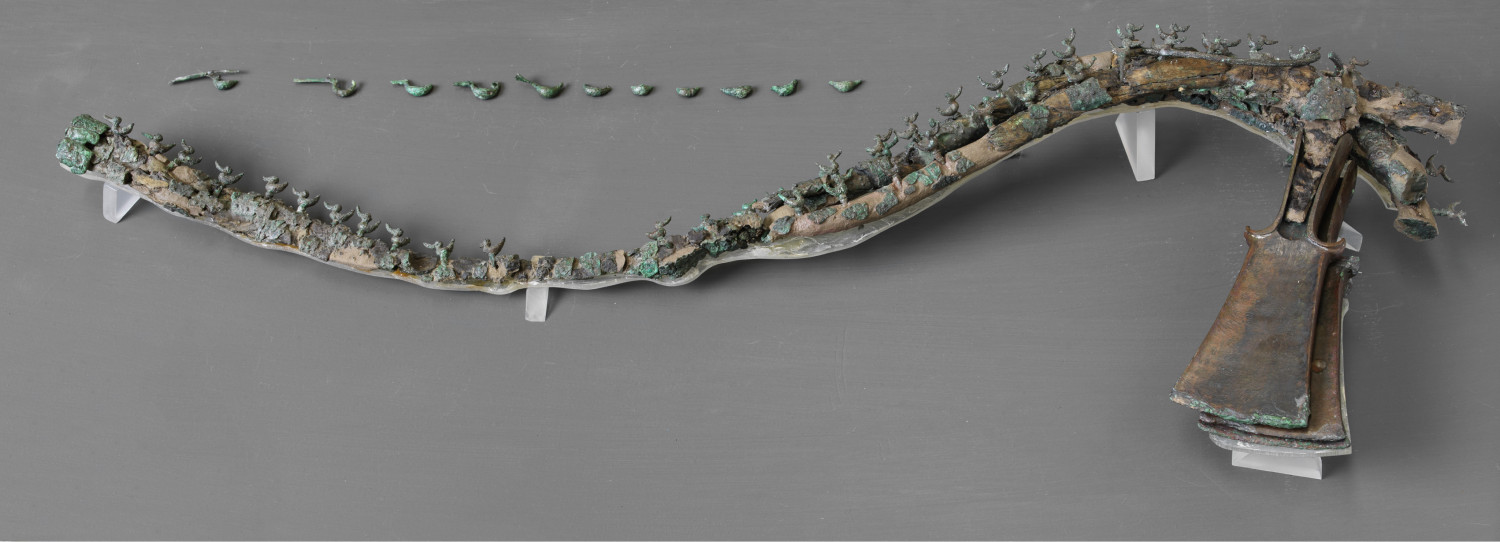
The Warrior Prince's axe symbolizing the Princeps' power was decorated with a row of bronze ducks. The function of these animals was to accompany the soul of the deceased on the journey to the afterlife. Together with the rich wine banquet set found in the Prince's tomb, the axe, with its loaded symbolic value, became a symbol and logo of the wine business that was springing up on the Nocera Hill in the late 1890s.

The courage to plant vines to produce wines of the highest quality, the strength to wait patiently for the birth of the first vintage, the honor of giving him the name "Prince Warrior" and using the duck as an auspicious symbol, as it was for the Prince, marked the birth of the Pagani de Marchi winery.

Etruscan wine

04

Etruscan wine

The Etruscans had been cultivating vines since the Bronze Age, beginning in the 12th century BC. The first vines to be cultivated were wild varieties, which the Etruscans saw in the natural environment and whose fruits they had already learned to harvest. Only later, contact with eastern Mediterranean peoples, especially the Greeks, allowed them to import new tools and ways of working, but also new vines of eastern origin, which were cultivated as such but also crossed with local varieties.

Vines were "maritate," that is, they were grown leaning on poplars, maples, elms, olive and fruit trees. At the time of the Etruscans, viticulture was not a specialized activity, so vines were mixed with other crops, such as cereals, olive trees, fruit trees and others. The Etruscans crushed grapes with hands and feet in crushers called palmenti, dug into natural rocky outcrops located near the places where wild vines were found or made in the vineyards at the time of early cultivation.

The first must was usually consumed immediately, while the remainder was poured into earthenware containers with the inside walls covered with resin or pitch. The wine was left to rest and in the spring was decanted and poured into amphorae or leather wineskins for transport. Much consumed during celebrations and banquets, the wine was diluted with water, cold or hot depending on the season, but also flavored and sweetened, to cover defects due to limited production and storage techniques, with honey, herbs, flowers, spices (such as thyme, sage, rosemary, coriander, and anise), and resins (commonly pine).

Resin wine, known as "retsina," is still produced and appreciated today, especially in Greece. Honey was added to the wine, both to increase its sweetness and to aid fermentation, creating a product similar to mead.

The psychopomp, symbol of Pagani de Marchi

The psychopomp

From the Prince’s good-luck charm
to the symbol of our winery

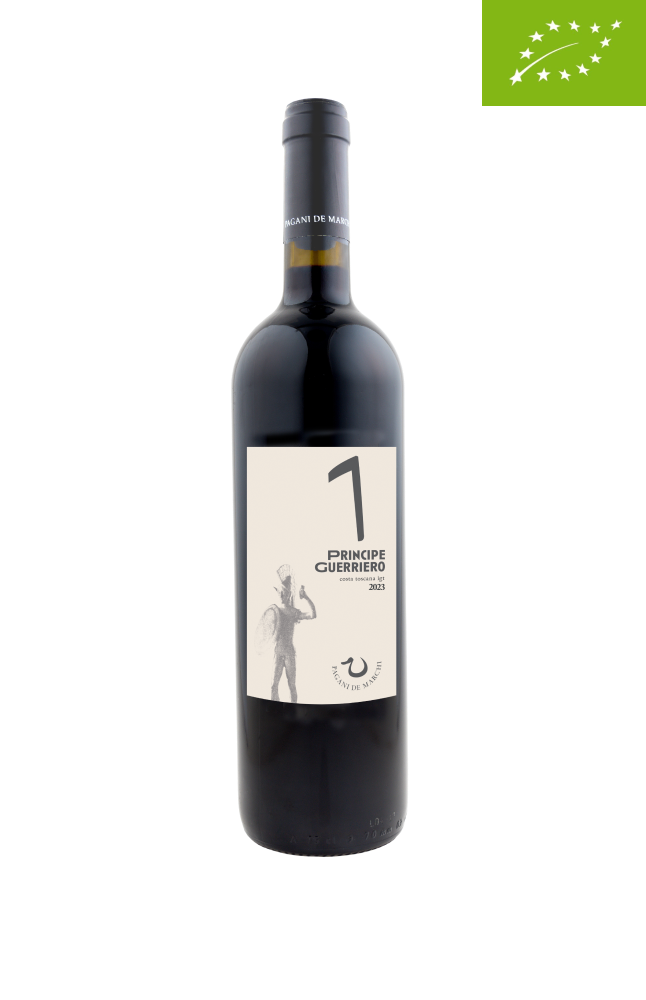
One of the discoveries made at the archaeological site hints, that vine cultivation in the area was already conducted in Etruscan times, more than 2,500 years ago. In one of the tombs present, attributed to a wealthy personage called the "Warrior Prince," numerous tools related to the cultivation of vines and wine were found, as indispensable utensils for the afterlife, for one who was certainly a lover of good wine. The discovery of the archaeological area was due to a chance event. Some people a few years before the planting of the vineyard, asked the owner if they could make a hunting lodge for the "flight of pigeons." Actually later it turned out to be a cover so that they could excavate and find Etruscan artifacts in what had been identified as an "Etruscan site." Thanks to archaeologists then it was possible to reconstruct the story of the Warrior Prince who is also depicted in the first wine produced by the winery since 2001.

Among the various finds unearthed, now kept in various museums, to which the winery then became inextricably linked, is the "psychopomp," a bronze duck belonging to the prince's axe found inside the tomb, which the Etruscans considered a kind of good luck charm in war. The prince's axe was found by the very lady Pia, who liked to attend excavations. Despite the archaeologists' intimations not to touch anything, one day Mrs. Pagani saw the axe sticking out of the ground and exclaimed, pulling it out, "There is something here!!!" For this reason and also for its auspicious value in wine production, the psychopomp was chosen as the company logo.

Principe Guerriero

The circle closes

The Prince’s wine,
in amphora once again

Since the 2023 vintage, the Principe Guerriero has been vinified in terracotta amphorae, much as it was in the days of the Etruscan prince, whose tomb lies in the midst of our vineyards.

Discover the Principe Guerriero