
Azienda Agricola · Casale Marittimo · Tuscan Coast
From Etruscan land
our vines arise
Five hectares of organic vineyards between Volterra and the sea, on land that guards the tomb of an Etruscan prince.
Who we are
A family story,
a land with Etruscan roots
We are a family business, born from the vision of Enrico Pagani and Pia Pagani de Marchi, developed by Pia and carried forward today by their son Matteo — with a constant desire to innovate, learn and open our minds.
Family
Three generations of passion: from founders Enrico and Pia, originally from Switzerland, to Matteo, who leads the estate today.
Culture
The winery has always been a way to spread culture, tell the stories of our land, and keep learning.
Innovation
An open mind and the will to challenge ourselves: from terracotta amphorae to scientific research in the vineyard.
Our story
From the discovery to today
The discovery
During farm work, two limestone sculptures from the 7th century BC emerge — among the oldest in all of Etruria. Excavations by the Superintendency bring to light the Etruscan necropolis of Casa Nocera.
The estate is born
Enrico and Pia plant the first vineyard, inspired by the great French wines. Meeting Michele Satta, an established Bolgheri producer, shapes the estate’s philosophy and the choice of varieties.
The first harvest
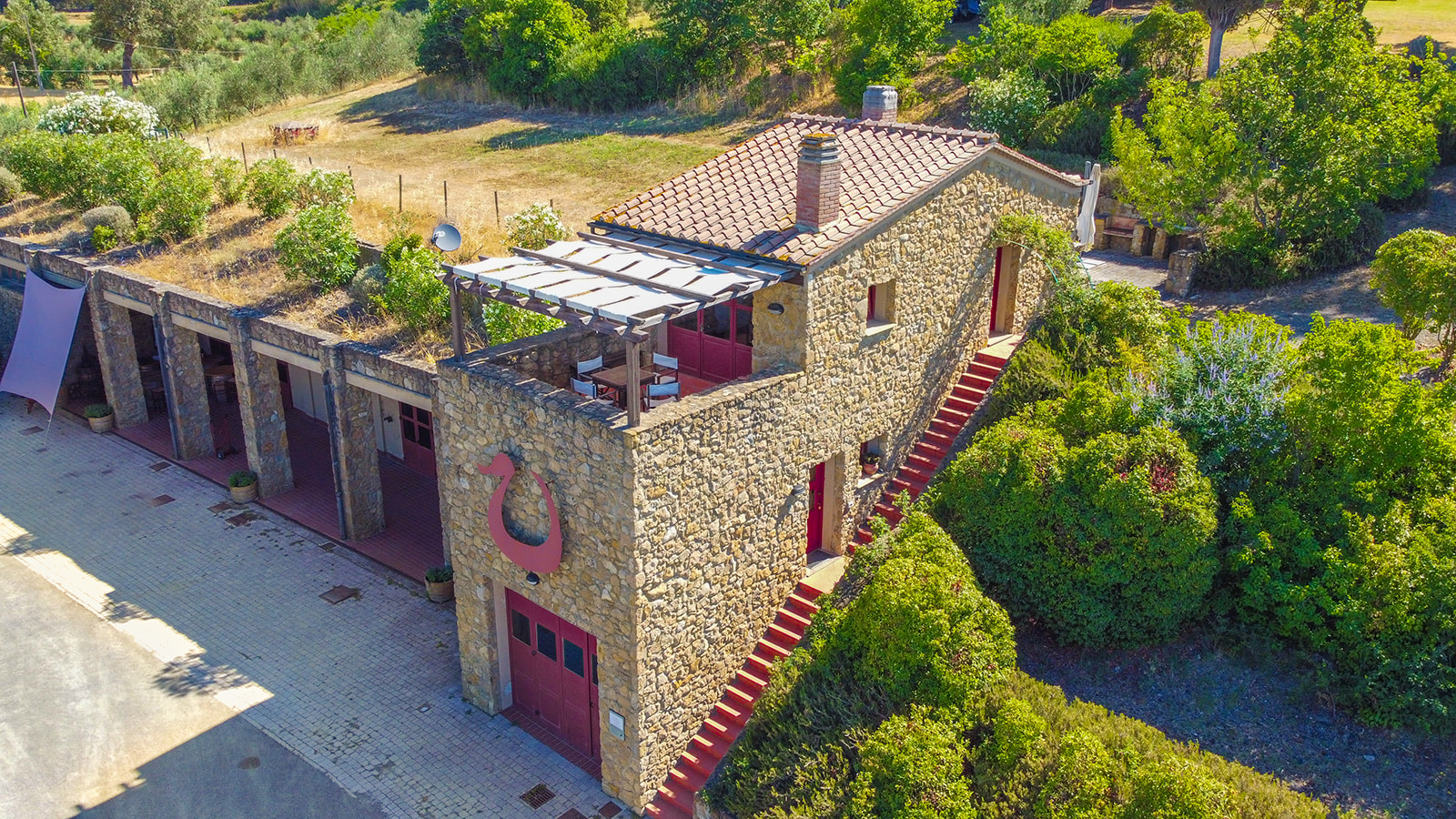
The land reveals its vocation: the first wine is born, dedicated to the Warrior Prince. The new cellar, almost invisible from the outside, is designed not to mar the landscape.
Going organic
The estate adopts certified organic farming: no chemical herbicides, no synthetic molecules. Organic as a starting point towards sustainability.
Research in the vineyard
A collaboration begins with the Sant’Anna School of Advanced Studies and the University of Pisa: an experimental project of biological pest control against the vine moth.
A new generation
Pia hands over to her son Matteo, who gives the estate a younger, more dynamic direction while respecting its roots.
Return to the amphora
The Principe Guerriero is vinified in terracotta amphorae, much as it was in the days of the Etruscan prince, whose tomb lies in the midst of the vineyards.
Etruscan origins
The Warrior Prince
rests among our vines
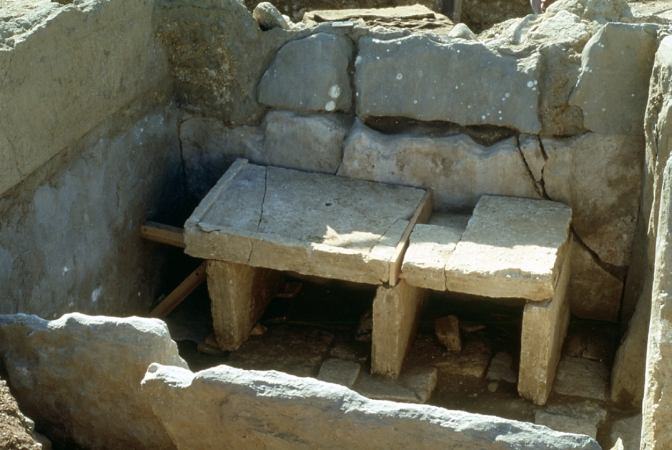
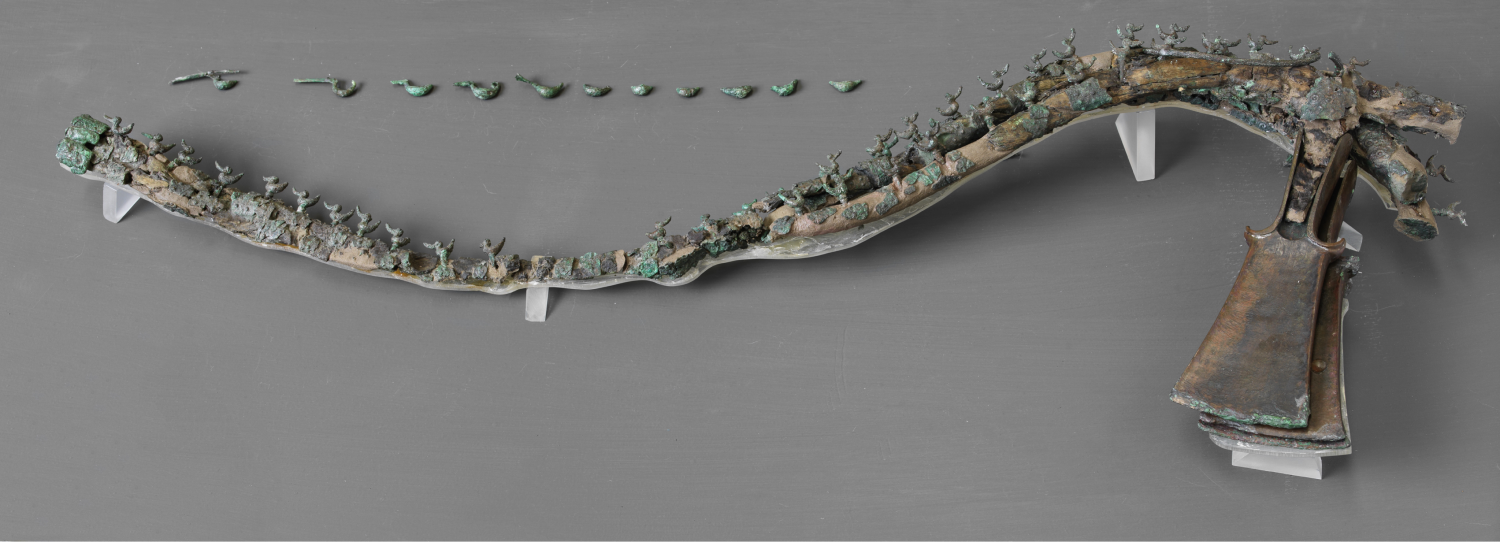
In the main tomb of the Casa Nocera necropolis — a great chest of stone slabs — bronze axes, swords, spears, a helmet and a parade shield revealed a warrior. The axe, a symbol of political and military power, and the ivory lituus also identify him as a priest and clan leader: a Warrior Prince, probably the founder of the Casalvecchio settlement, buried here between the end of the 8th and the first decades of the 7th century BC.
“There’s something here!!”
— Pia Pagani de Marchi, seeing the Prince’s axe emerge from the ground during the excavations
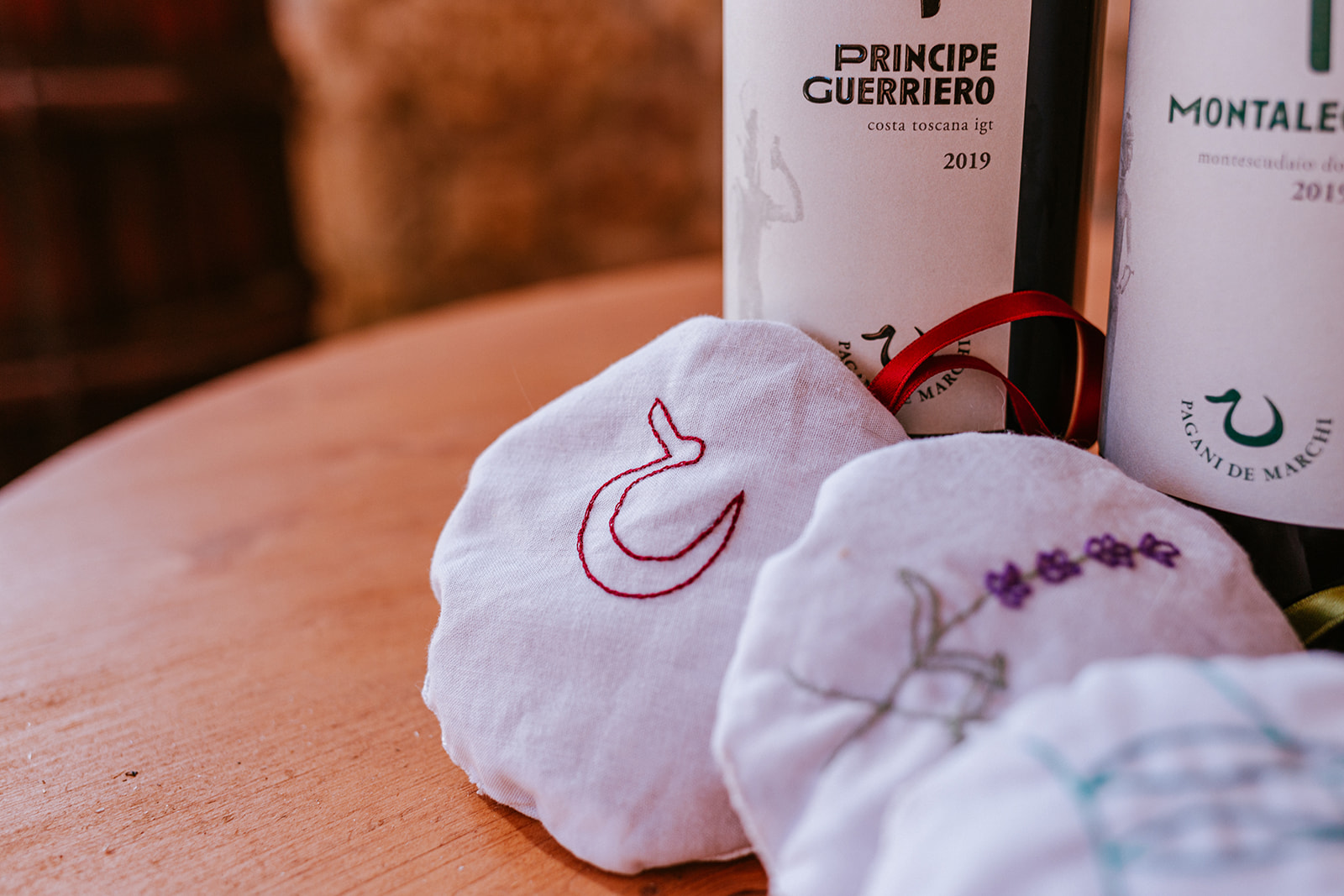
The bronze duck on the axe — the psychopomp, a good-luck charm in war for the Etruscans — is today the symbol of our estate. And among the finds was an entire wine-tasting set: proof that wine was being made here more than 2,500 years ago.
Discover the Etruscan historyThe family
Developed by Pia,
led by Matteo
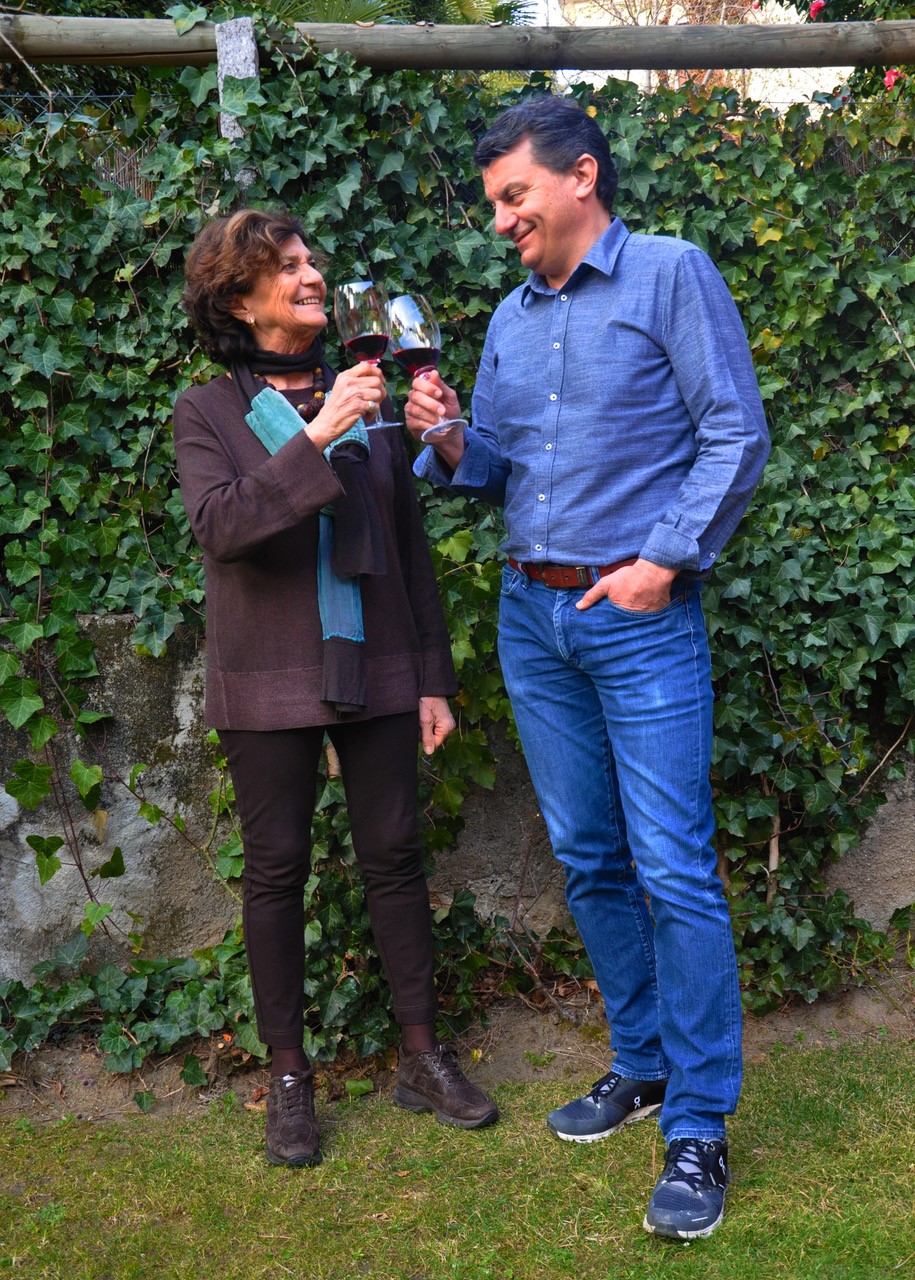
Pia bought the farmhouse in the early 1980s as a summer holiday home, a few kilometres from Volterra. With her husband Enrico, a lover of French wines, she later decided to turn it into a winery. Since 2021 Matteo has carried it forward, supported by the estate’s long-standing collaborators.
“We put in the time and patience to refine them; all we ask of you is to wait for them.”
— Pia Pagani de Marchi
- Enrico PaganiFounder
- Pia Pagani de MarchiFounder
- Matteo PaganiAt the helm since 2021
- Attilio PagliOenologist
- Michele SattaConsulting oenologist
- Stefano MoscatelliAgronomist
- Ilaria SimoniHospitality & sales
Terroir & method
An almost artisanal way of working
Human intervention as a support to nature’s work: organic farming, spontaneous fermentations, and a cellar you cannot see.
- Soil
- Pliocene sedimentary clays: calcareous, rich in potassium, magnesium and assimilable calcium.
- Vineyard
- About 5 hectares facing south-east, south and south-west, at around 200 metres above sea level.
- Varieties
- Sangiovese, Merlot, Cabernet Sauvignon and Vermentino, Guyot-trained.
- Yields
- 50–60 quintals per hectare: almost artisanal work, only possible on small plots.
- Cellar
- 50 hl temperature-controlled steel vats, spontaneous fermentations, manual pump-overs.
- Ageing
- French oak barriques and tonneaux, terracotta amphorae; then 12–18 months in bottle.
Culture
Festival del Pensare
Pia is a driving force behind the Festival del Pensare: every year she invites internationally renowned guests — scientists, artists, philosophers and even astronauts — to open participants’ minds to new points of view. The festival has become a true cultural institution of the region.
Visit the festival website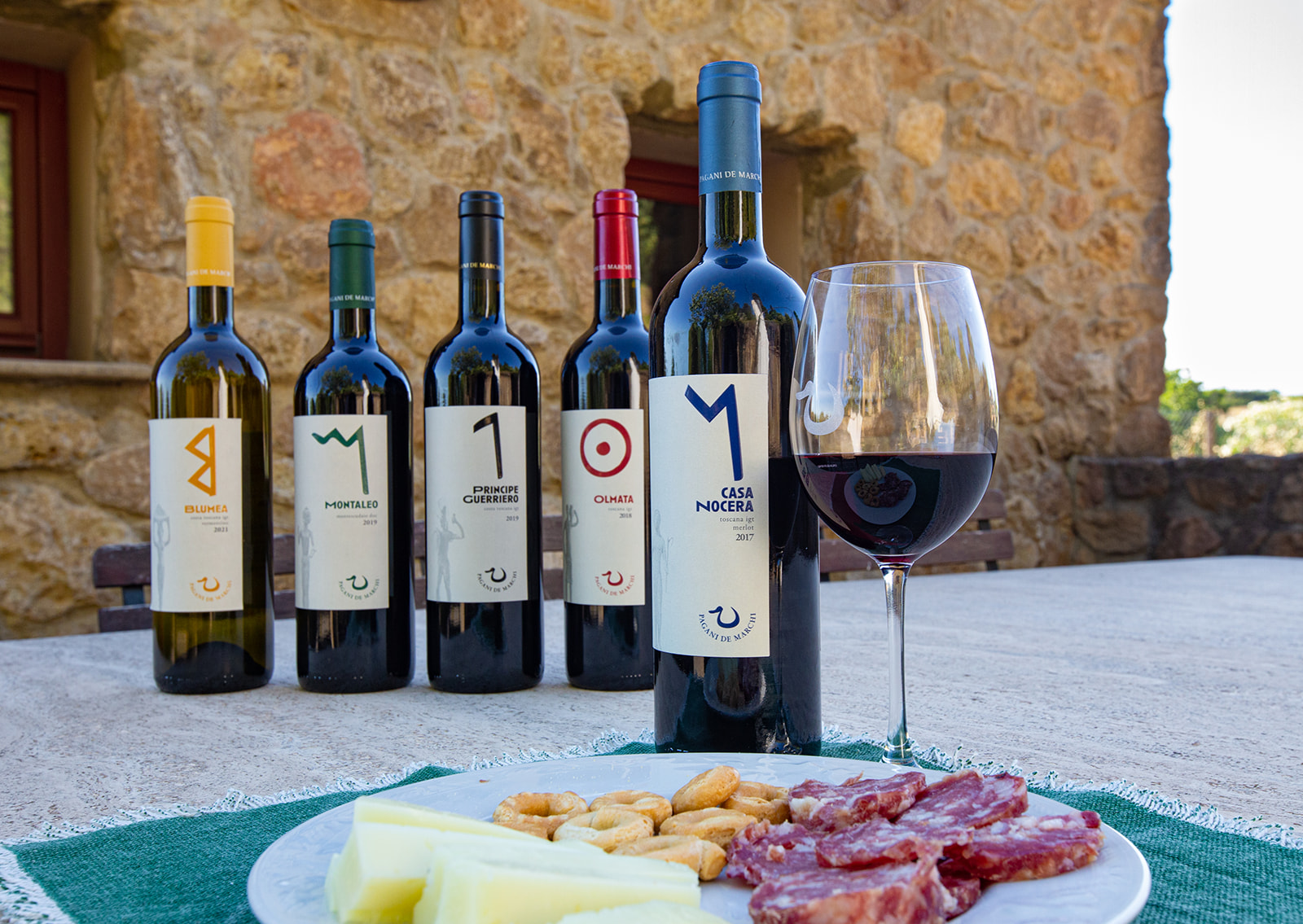
Come and visit us
Wine is the poetry of the earth
Cellar visits with guided tasting Monday to Saturday at 4 pm, by reservation.
From the barrel cellar with its terracotta amphorae to the panoramic terrace over Casale Marittimo.